DATE
Loading...
TIME
Loading...
About Us

The Department of Information and Communications Technology (DICT) has laid out four pillars for Cybersecurity Awareness Month 2026, putting greater emphasis on awareness, digital trust, collaboration and resilience as cyber threats continue to evolve.
This year’s observance carries the theme “HABI: Salig sa Gawa, Tibay sa Banta,” with the accompanying message “A People-Centered Approach to a Resilient Philippine Cyberspace.”
Through its Cybersecurity Bureau, the DICT said HABI represents interconnection, drawing from the idea of woven threads coming together to create something stronger.
In the cybersecurity context, the framework brings together government, the private sector, academe, civil society and individual Filipinos in strengthening the country’s digital resilience.
The campaign is divided into four pillars: Cyber Tanaw, Cyber Salig, Cyber Balangay and Cyber Tibay, with each focusing on a different part of cybersecurity preparedness.
Cyber Tanaw: Understanding what is changing
The first pillar, Cyber Tanaw, focuses on understanding changes in the digital environment and what these developments could mean for security, trust and preparedness.
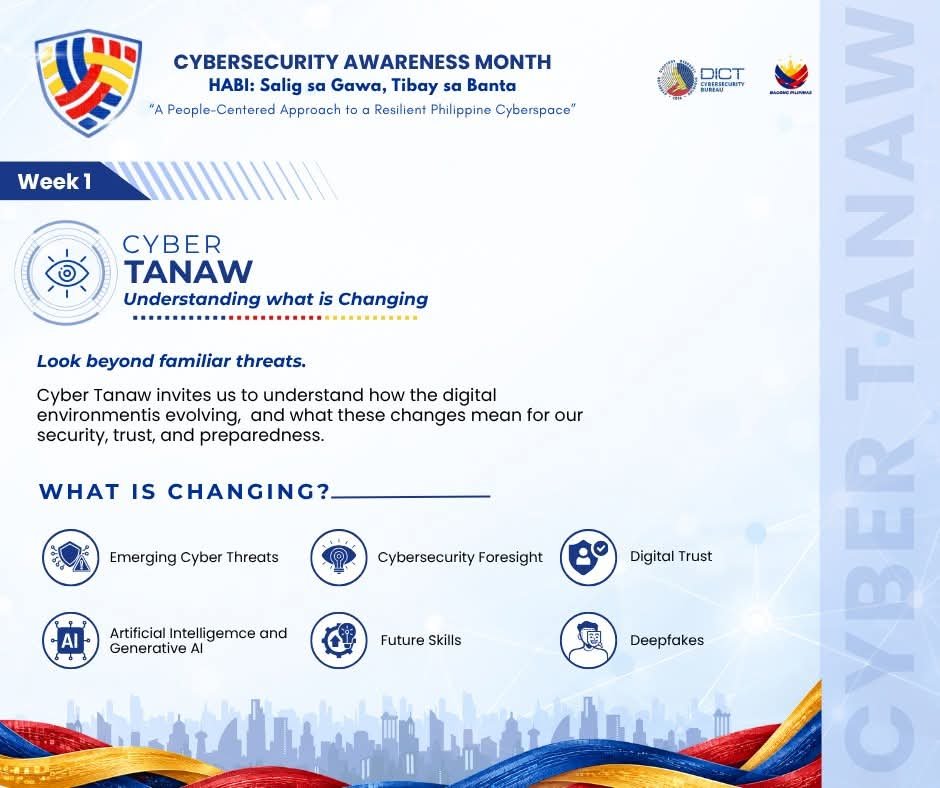
The DICT identified emerging cyber threats, cybersecurity foresight, digital trust, artificial intelligence and generative AI, future skills and deepfakes as key areas under the pillar.
The approach calls attention to how cybersecurity risks are changing alongside rapidly developing technologies, requiring users and organizations to look beyond familiar threats and anticipate new ones.
Cyber Salig: Strengthening digital trust
Cyber Salig shifts the focus to strengthening the foundations needed for a safer digital environment.
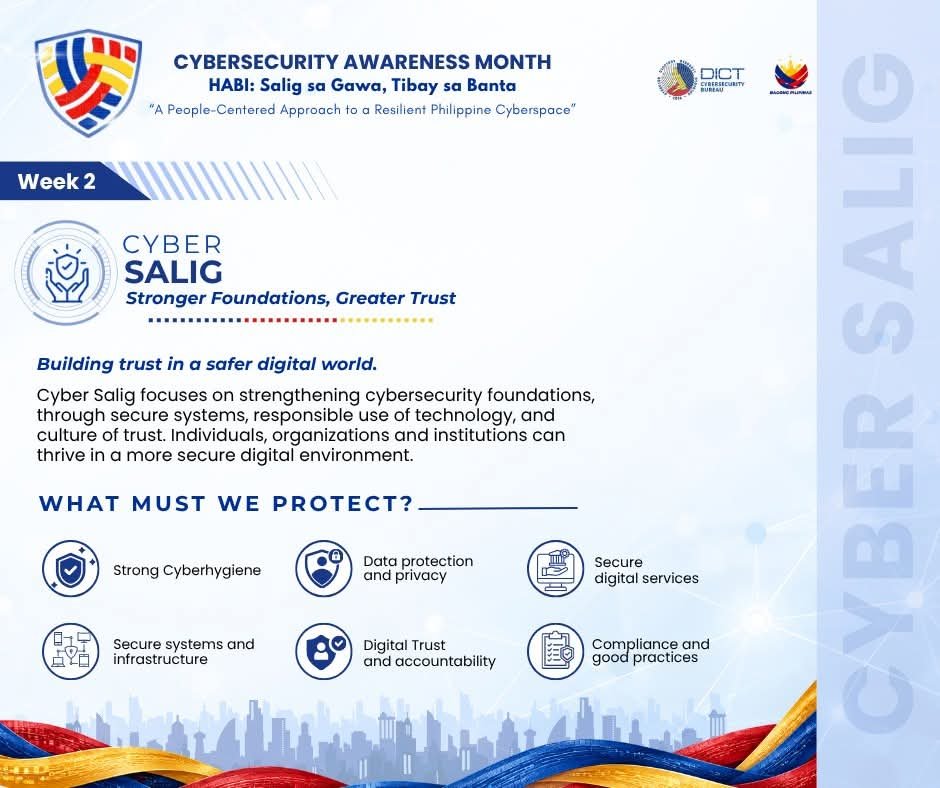
Among the areas highlighted are strong cyber hygiene, data protection and privacy, secure digital services, secure systems and infrastructure, digital trust and accountability, as well as compliance and good practices.
The pillar emphasizes that cybersecurity is not limited to responding to attacks but also requires building systems and practices that users can trust.
Cyber Balangay: Building security together
The third pillar, Cyber Balangay, emphasizes collective responsibility and partnerships across sectors.
It covers collaboration and partnership, public-private cooperation, sectoral engagement, a whole-of-society approach, cyber education and capacity building, and collective resilience against cyber threats.
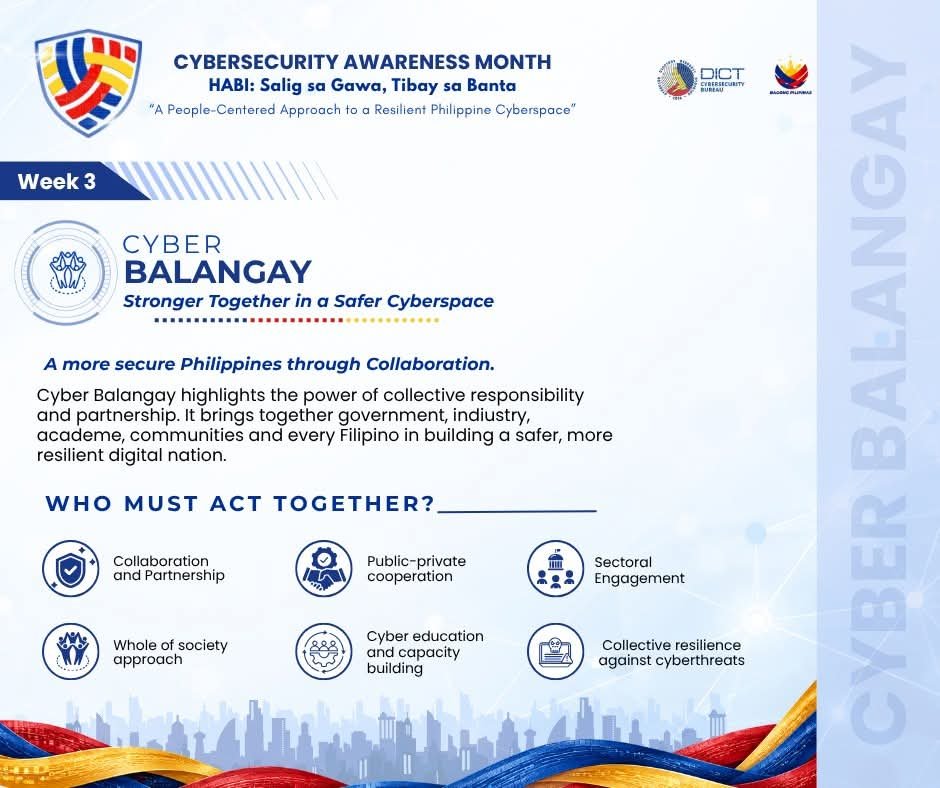
The framework positions cybersecurity as a shared responsibility rather than a concern limited to government agencies or information technology teams.
By bringing government, industry, academe and communities together, the DICT aims to strengthen the country’s ability to address threats across an increasingly interconnected digital environment.
Cyber Tibay: Building lasting resilience
Cyber Tibay completes the four-pillar framework by focusing on long-term resilience.
Under the broader HABI framework, the pillar is centered on building the ability to prevent, respond to, recover from and adapt to cyber threats and disruptions.
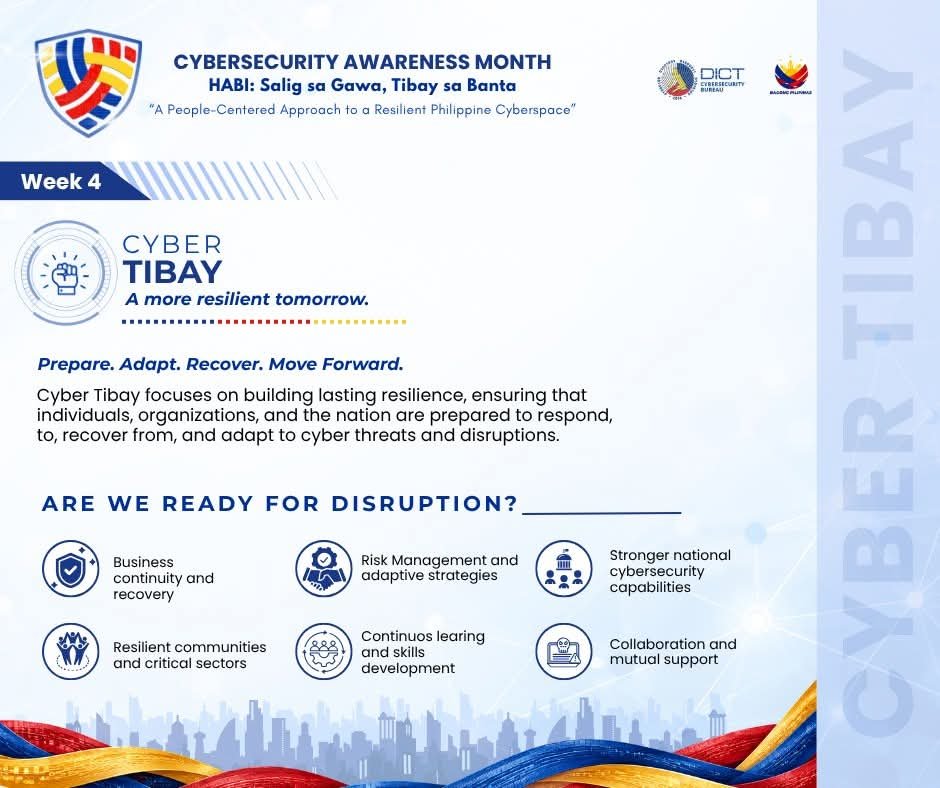
The four pillars are designed to progress from understanding emerging risks through Cyber Tanaw, strengthening trusted foundations through Cyber Salig, encouraging collective action through Cyber Balangay, and ultimately building lasting resilience through Cyber Tibay.
Cybersecurity Awareness Month comes as Filipinos increasingly rely on digital platforms and services for communications, financial transactions, government services and everyday activities, expanding both the opportunities and risks presented by the country’s growing digital ecosystem.