DATE
Loading...
TIME
Loading...
About Us

By San Matildo
Instagram has clarified that the recent wave of unsolicited password reset emails sent to some users was not the result of a data breach, assuring the public that its systems remain secure.
In a post on its official X (formerly known as Twitter) account , Instagram said it had fixed an issue that allowed an external party to trigger password reset emails for a limited number of users. The company stressed that the incident did not involve any compromise of internal systems or exposure of user accounts.
“We fixed an issue that let an external party request password reset emails for some people. There was no breach of our systems and your Instagram accounts are secure,” the company said. Users were advised that they can safely ignore the unexpected emails and that no further action is required.
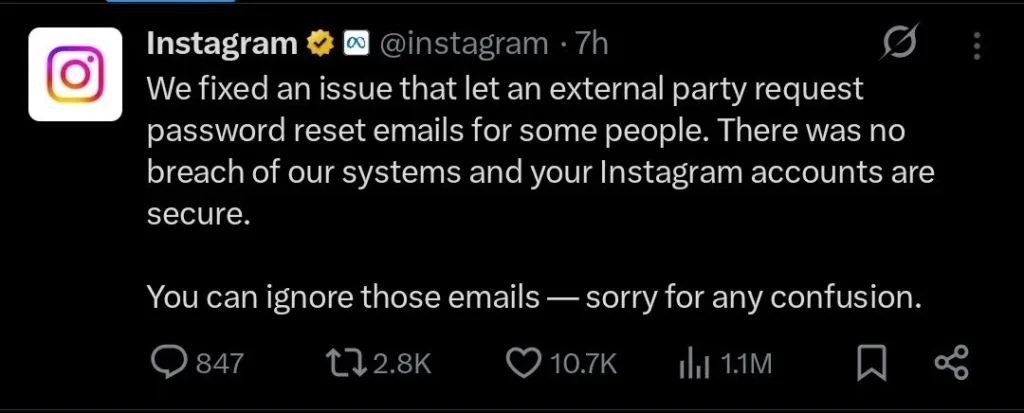
The clarification follows online speculation and alarm after users reported receiving multiple password reset notifications, prompting concerns of a possible large-scale hack. Instagram’s statement effectively debunked those claims, explaining that while the emails caused confusion, they did not indicate that accounts had been accessed or taken over.
Instagram’s reassurance underscores that the safest response is to avoid interacting with suspicious messages and to rely only on official in-app security notifications.
The company apologized for the confusion caused by the incident, adding that the issue has already been addressed.
RELATED STORY:
Relax, your Instagram is safe, the viral ‘breach’ scare is not what you think