DATE
Loading...
TIME
Loading...
About Us

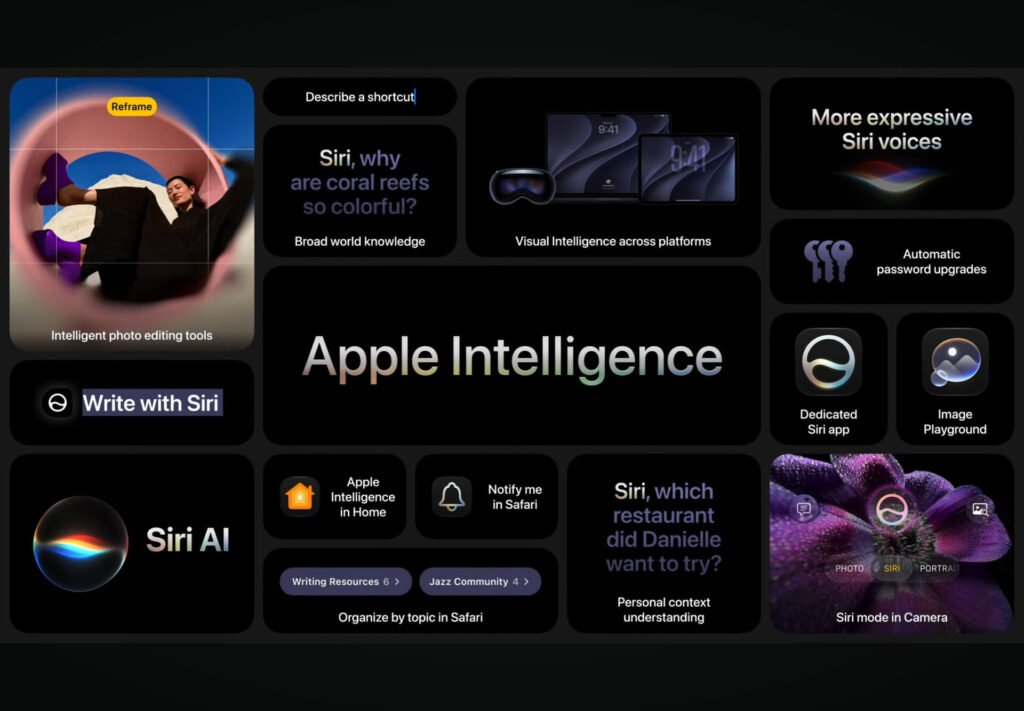
Apple has introduced the next generation of Apple Intelligence, bringing a wider set of AI-powered features across Siri, Safari, Photos, Messages, Mail, Calendar, Phone, Home, Shortcuts, and other core apps.
Announced during Apple’s Worldwide Developers Conference, the new Apple Intelligence system is built around a new architecture that combines on-device processing, Apple foundation models, and Private Cloud Compute. Apple said the goal is to make AI more personal and useful while keeping privacy at the center of the experience.
Apple said it worked with Google, using technologies behind the Gemini family of models, to create the next generation of Apple Foundation Models.
According to Apple, the upgraded system brings improved understanding, reasoning, and multimodal capabilities, including text, image, speech, and visual understanding. It also allows Apple Intelligence to coordinate across apps through a new system orchestrator, enabling features such as personal context understanding, App Actions, on-screen awareness, and access to broad world knowledge.
One of the biggest announcements is Siri AI, a rebuilt version of Siri powered by Apple Intelligence. Apple said Siri AI can now understand personal context, take action across apps, respond to what is on screen, answer questions using broader world knowledge, and support more conversational interactions.
With Siri AI, users can ask follow-up questions, search for personal information across apps, create plans, summarize details, and complete tasks such as finding photos and adding them to a shared album.
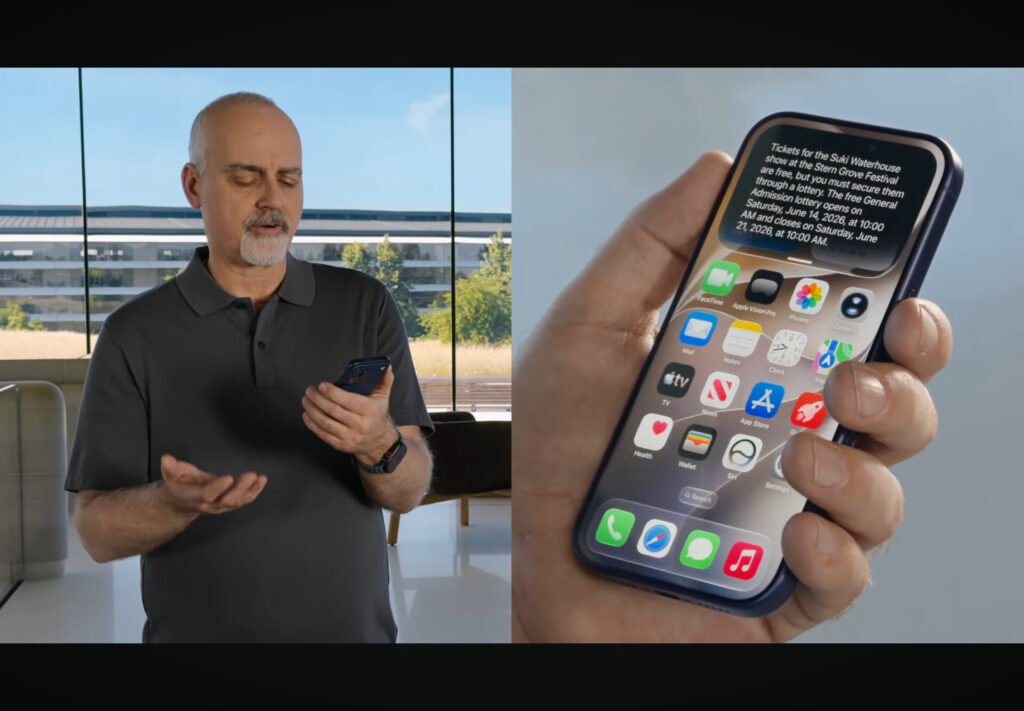
Apple also showed how Siri can help plan events, search messages, generate a menu, and send the final plan to a group chat.
On supported devices, Siri will also receive a more expressive voice experience and improved system-wide dictation. Apple said the new dictation system is designed to better capture spelling, punctuation, and capitalization across apps.
Apple Intelligence is also expanding across everyday apps. In Safari, Apple said AI can help organize tabs into topics by analyzing pages and grouping related tabs together. Safari can also monitor certain pages for changes and notify users when updates are detected.
Passwords will also use Apple Intelligence and Safari to help users update eligible accounts to stronger passwords with just a tap. Apple said the system can securely navigate through websites on the user’s behalf to help fix passwords.
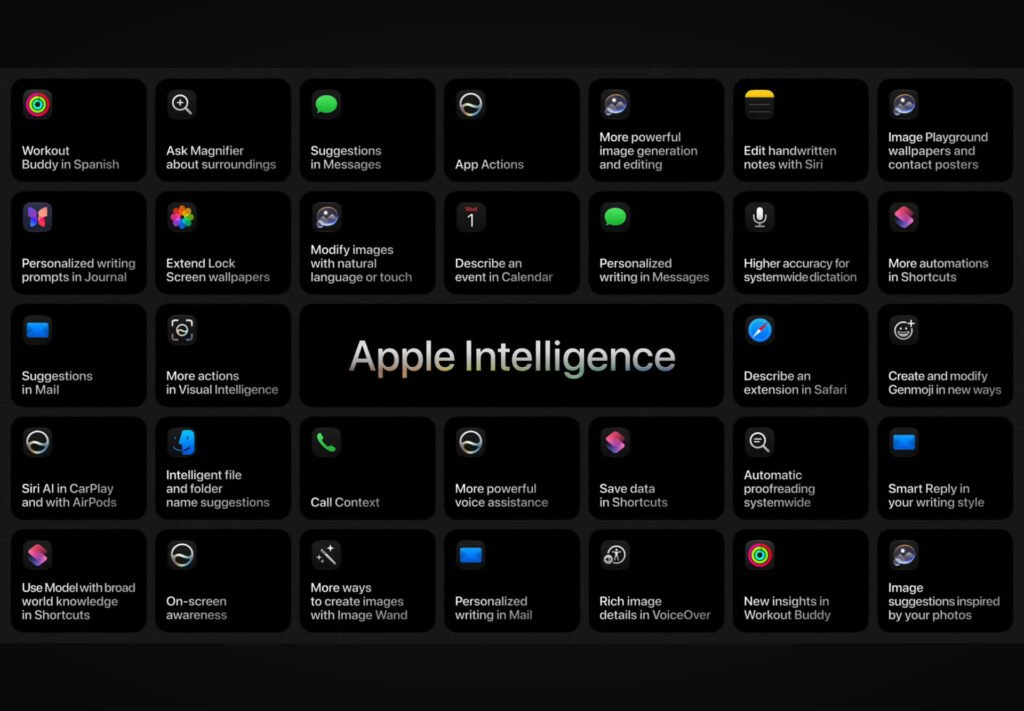
In Messages, Apple Intelligence can help users find photos by recognizing keywords, locations, and people named in the photo library. Mail will offer more capable suggestions based on email context, while Calendar will allow users to add or edit events using natural language.
The Phone app is also getting an AI-powered feature called call context, which can surface relevant information from across apps before or during a call. For example, when calling an airline, the app may find a confirmation code from Mail. Apple said the feature looks at who the user is calling, not what the user is saying, and runs entirely on-device.
Apple is also bringing new AI features to the Home app. The app can now group related accessory notifications into a single activity and use Apple Intelligence to summarize recorded clips from compatible cameras. Users will also be able to search for relevant footage across cameras based on what happened in the video.
Shortcuts is getting a major AI upgrade as well. Users can now describe the shortcut they want to create, and Apple Intelligence will assemble the needed steps using natural language. This allows users to build automations without manually setting up each action.
Apple also introduced a new version of Image Playground, which now supports higher-quality images in different styles, including photorealistic images. The new experience uses generative models running on Private Cloud Compute and allows users to refine images through natural language or touch.
In Photos, Apple Intelligence will power upgraded editing tools, including improved cleanup, image extension, and spatial reframing. The new reframe tool allows users to adjust the perspective of a photo, with generative models filling in only the missing areas created by the shift.
Apple said these AI features are designed to preserve the original moment of a photo while giving users more flexibility in editing. The company said the features will work on almost any photo in a user’s library, including older photos and photos taken with other cameras.
For developers, Apple said Apple Intelligence can be integrated into apps through technologies such as App Intents. This will allow apps to surface information and complete actions through Siri. Apple also said developers will be able to use the new Image Playground API.
Apple CEO Tim Cook said the company is bringing improvements across its platforms while expanding Apple Intelligence.
“We’re excited to bring a wide range of improvements to each of our platforms, making them even more useful and delightful. We’re also continuing to provide more features that will help kids enjoy their Apple products to the fullest while ensuring their experiences are most appropriate for them. And the next generation of Apple Intelligence introduces new capabilities, including Siri AI,” Cook said.
“Our new OS releases will be available as developer betas today, with a public beta coming next month, and they will be available to users this fall,” he added.
Apple said availability of some Apple Intelligence features will vary by region, including in the European Union and China, as the company works through privacy, security, and regulatory requirements.
Apple also emphasized that privacy remains central to its AI strategy. The company said Apple Intelligence uses on-device processing and Private Cloud Compute, with user data used only to complete requests and not stored or made accessible to Apple.
With the new Apple Intelligence system, Apple is framing AI as a deeper layer across the iPhone, iPad, Mac, and other Apple platforms. From Siri AI to Photos, Safari, Calendar, Home, and Shortcuts, the company is bringing AI into daily workflows while continuing to present privacy as one of its key advantages.