Neuralink tests technology that lets users communicate through thought
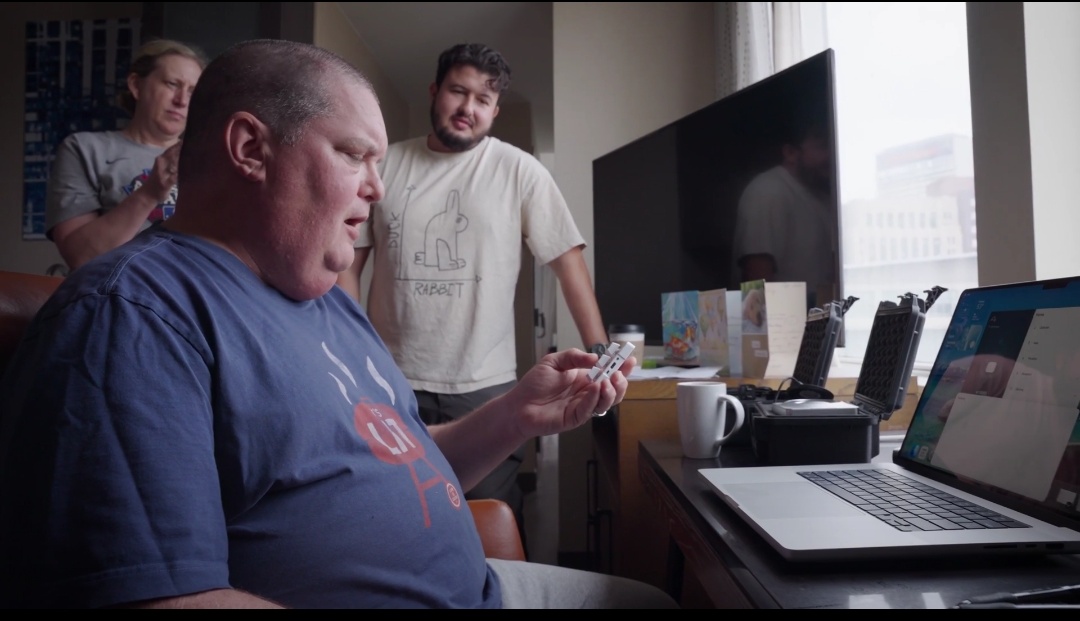
On October 30, Neuralink shared the results of a 72-hour engineering hackathon conducted at the home of one of its speech restoration study participants, where engineers developed and tested features designed to improve communication through its brain-computer interface (BCI).
-
Courtesy of Neuralink
On October 30, Neuralink shared the results of a 72-hour engineering hackathon conducted at the home of one of its speech restoration study participants, where engineers developed and tested features designed to improve communication through its brain-computer interface (BCI). Neuralink is a privately held company controlled by Elon Musk, who is its founder and majority/controlling owner. Rather than focusing solely on laboratory development, the team worked directly with a participant to explore how the technology could support everyday activities, from speaking through a mobile application to making phone calls and controlling computer functions.
One of the developments was a voice activity detection system that automatically recognizes when a user intends to speak.
Previously, starting and stopping the recording of speech intention required pressing a button. The new system was designed to detect when a person is attempting to communicate, reducing the need for manual interaction.
According to Neuralink, the feature represents progress toward making communication completely hands-free for people with speech impairments.
The engineers also developed real-time visualizations that allow participants to see the intensity and distribution of neural signals detected by their implants.
The feature addresses one of the technical challenges of brain-computer interfaces: identifying which intended or imagined actions produce stronger neural activity to improve the performance of systems that interpret brain signals.
Another prototype explored how users could interact with artificial intelligence through thought.
Neuralink demonstrated a computer-use feature that allows participants to activate a Grok AI agent by thinking of the phrase "Hey Neuralink" along with a task they want the system to perform.
The company described the prototype as an early demonstration of how communication between the brain and computers could become more direct.
Making Everyday Conversations Easier
Beyond controlling computers, Neuralink also focused on improving how participants communicate with other people.
The company has been developing Bloom, a mobile application designed to make speech-based brain-computer interface technology more accessible.
During the hackathon, engineers evaluated the application in everyday situations and identified areas that could be improved based on the participant's experience.
One of the features integrated Bloom with iPhone calling, allowing speech generated through the BCI system to be transmitted directly into a phone call's microphone audio stream.
This means the person receiving the call could hear audio produced through the communication system.
The team also tested optional greetings that could inform recipients that the caller is using assistive communication technology.
These developments are intended to make conversations feel more natural and reduce the technical steps required for someone relying on a brain-computer interface to communicate.
Neuralink said the hackathon was only one stage of its ongoing development, with engineers continuing to identify features that could improve the technology.
The company is also recruiting engineers specializing in machine learning, software development, and other disciplines to support future improvements.
However, Neuralink emphasized that its devices remain investigational and have not been approved by the US Food and Drug Administration (FDA) or other regulatory authorities.
It also clarified that the individuals featured in its demonstrations are voluntary clinical trial participants whose personal experiences may not represent those of other participants or predict future outcomes.
Key points
- On October 30, Neuralink shared the results of a 72-hour engineering hackathon conducted at the home of one of its speech restoration study participants, where engineers developed and tested features designed to improve communication through its brain-computer interface (BCI).