DATE
Loading...
TIME
Loading...
About Us

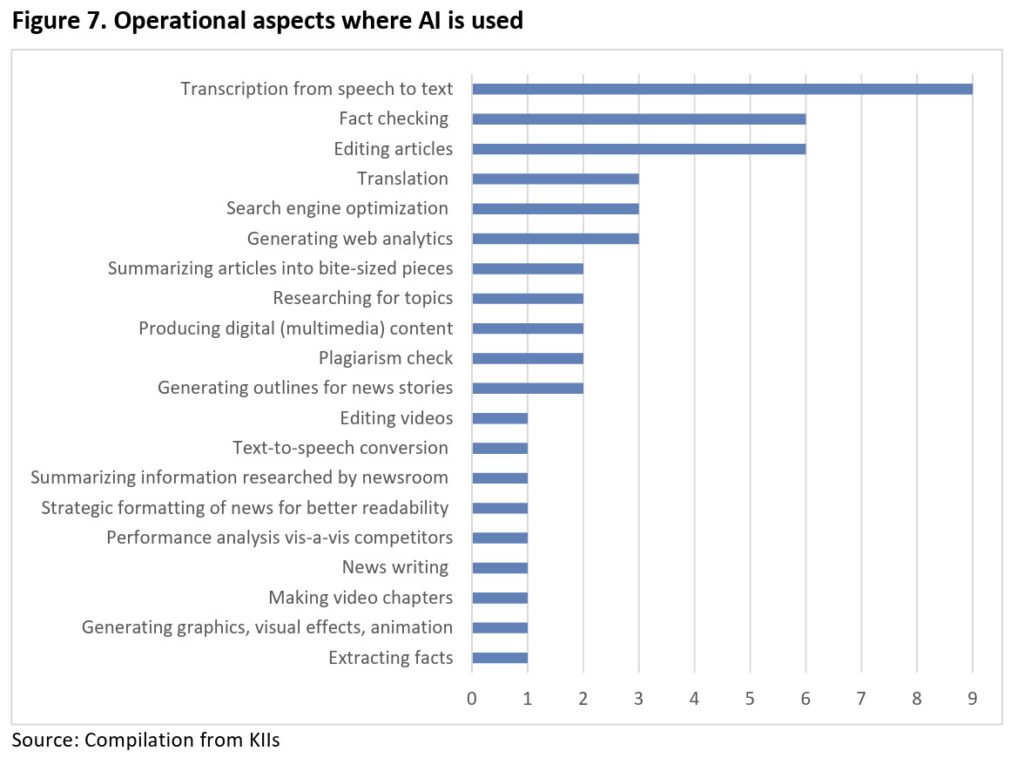
Artificial intelligence is becoming a regular tool in Philippine newsrooms, helping journalists transcribe interviews, edit stories, check facts, conduct research, and analyze audience behavior, according to a study by the Philippine Institute for Development Studies.
The study, titled “AI Use in Philippine News Media: Adoption, Impacts, and Challenges,” found that AI is being used by news organizations to improve efficiency and support digital content production as demand grows for faster, multimedia-driven reporting.
However, the study warned that AI also brings serious concerns for journalism, particularly on credibility, intellectual property rights, and the long-term sustainability of media organizations.
Researchers said AI is currently being used to support, not replace, journalists. Among participating organizations, no AI-related job losses were reported.
Human oversight remains necessary, the study said, especially in verifying information, adding context, and ensuring that news content follows journalistic standards.
“While AI improves operational efficiency, enhances productivity, and boosts audience engagement, it has also posed complex challenges that threaten the sustainability, integrity, and intellectual property of news media organizations,” the authors said.
The study noted that AI-generated content could worsen the spread of misinformation, fabricated materials, and inaccurate information if the technology is not used responsibly.
This risk is especially significant in the Philippines, where 90.8 million Filipinos, or about 78 percent of the population, use social media platforms.
Researchers also warned that AI-generated outputs may contain inaccuracies or biases, making it harder for audiences to distinguish credible journalism from manipulated or fabricated content.
Beyond credibility, the study raised concerns over the business model of journalism. AI-powered platforms can provide direct summaries of news stories, which may reduce traffic to original news websites and affect advertising and subscription revenues.
The study also flagged the issue of content scraping, where journalistic content may be used to train AI systems without proper authorization, attribution, or compensation.
According to the researchers, only a limited number of Philippine media organizations currently have formal AI policies, pointing to the need for clearer standards on responsible, transparent, and ethical AI use in newsrooms.
To address these risks, the study called for stronger governance mechanisms, improved media and information literacy, greater accountability from technology platforms, and closer collaboration among government, media, technology companies, academic institutions, and civil society groups.
The researchers also proposed exploring policies that would compensate media organizations when their content is used to train AI models or enhance digital platform services.
“By proactively addressing the challenges and capitalizing on the opportunities presented by AI, the Philippine news media industry can adapt to the evolving landscape and continue to fulfill its critical role in society as a source of reliable information, a mechanism for accountability, and a catalyst for national development,” the study concluded.