DATE
Loading...
TIME
Loading...
About Us

Scam Watch Pilipinas brought its cybersecurity and responsible artificial intelligence advocacy to Catholic communities as part of its efforts to help religious leaders, church workers, and the youth protect themselves from digital threats while learning how to use AI more responsibly.
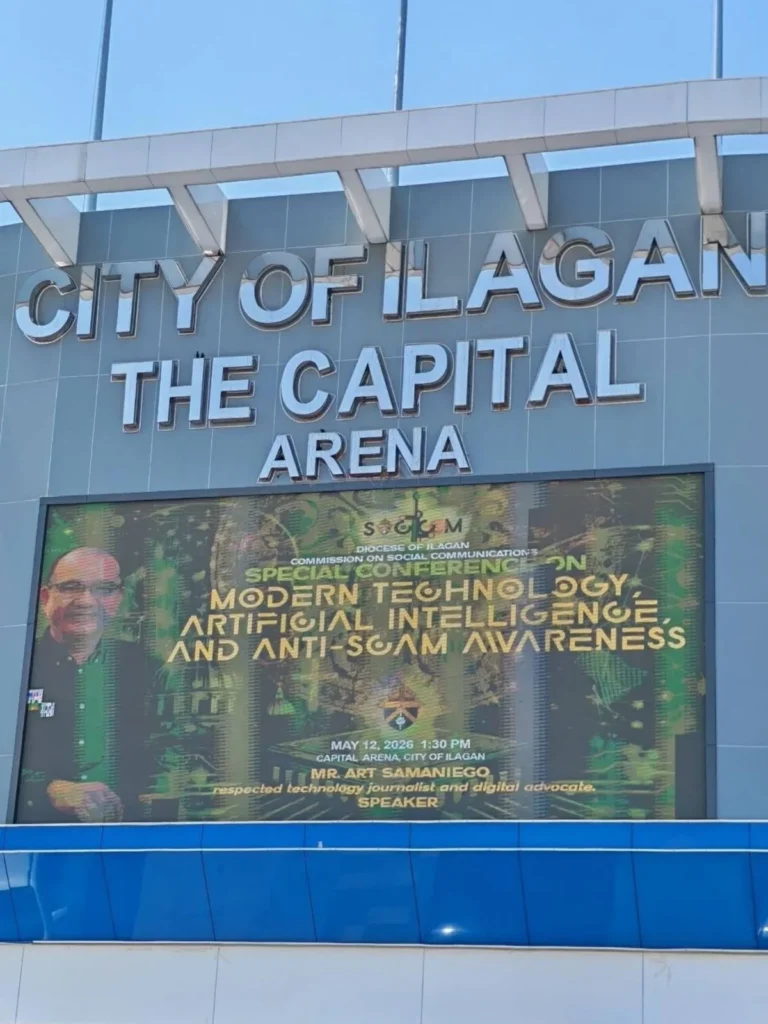
The campaign reached several Catholic dioceses, including the Archdiocese of Zamboanga, Malolos, Pampanga, Ilagan, Naga, the Archdiocese of Manila for the Episcopal Commission on Social Communications, and the Catholic Bishops’ Conference of the Philippines.
The initiative followed a series of discussions led by Scam Watch Pilipinas co-founder and TechWatch PH CEO Art Samaniego Jr., covering cybersecurity protection for religious leaders, practical AI use for priests, and responsible AI engagement for young people and church workers.
In the cybersecurity discussion titled “Securing the Mission,” Samaniego discussed the growing digital risks faced by bishops, priests, parish workers, and religious organizations as more church activities, records, communications, and community engagements moved online.
The discussion noted that religious leaders were increasingly targeted by cybercriminals because of the sensitive information they handle, including personal data, financial records, parish communications, and official church accounts.

“Churches have long protected their physical spaces because they hold sacred treasures. Today, we must also protect our digital spaces because they carry the trust, identity, and personal information of our communities,” Samaniego said.
Among the threats discussed were phishing attacks, account takeover of email and social media accounts, data breaches, social engineering, malware and viruses, AI deepfakes and voice cloning, unsecured Wi-Fi networks, and sextortion and blackmail scams.
Scam Watch Pilipinas said these threats could affect church communications, donation channels, parish records, and the trust built between religious leaders and their communities.
“My dear brothers and sisters, we do not lock the doors of our Cathedrals because we are afraid; we lock them because the treasures inside are sacred. We must now do the same for our digital doors,” Samaniego said.
Apart from cybersecurity, Scam Watch Pilipinas also held an AI-focused session titled “How to work smarter, not harder”.
The session focused on how priests and religious leaders could use AI tools for strategic decision-making, improved productivity, content preparation, information organization, and better communication with their communities.
Scam Watch Pilipinas said AI could help religious leaders prepare materials, organize ideas, support outreach efforts, and improve day-to-day ministry work. However, the group emphasized that AI should be used with human judgment, proper verification, and ethical responsibility.
“AI can help religious leaders work smarter, communicate better, and serve more people, but it should never replace discernment, compassion, and human responsibility,” Samaniego said.
The advocacy campaign also featured a youth-focused discussion titled “AI for the Youth: Power, Purpose, and Responsibility,” held in the Archdiocese of Zamboanga and the Diocese of Ilagan, and designed for school and church workers to promote responsible and ethical use of artificial intelligence.
The session framed AI not only as a technology issue, but also as a matter of values, choices, and responsible digital behavior.
Scam Watch Pilipinas discussed how AI could serve as a powerful tool for growth by helping students understand lessons, summarize readings, generate ideas, plan tasks, learn new skills, and improve creativity and efficiency. However, the discussion stressed that AI should help people think, not replace their thinking.
The discussion also warned about the possible dangers of AI misuse, including misinformation, overdependence, privacy risks, cheating, deepfakes, and harmful advice.
On misinformation, the discussion noted that AI could generate content that sounds confident and authoritative even when it is factually incorrect. Participants were reminded to verify AI-generated information using reliable sources.
The discussion also reminded participants to protect their privacy by never sharing sensitive information such as passwords, one-time passwords, or private details with AI platforms. It also encouraged users to treat AI interactions like public conversations and assume that anything entered into a tool could be accessed.
Scam Watch Pilipinas said the initiative highlighted the need to bring digital safety and AI literacy closer to trusted community networks, including churches, schools, and faith-based organizations.
The group pointed out that cybersecurity should no longer be treated as a purely technical concern, but as a shared responsibility involving institutions, families, communities, and trusted public voices.
Through the church engagement, Scam Watch Pilipinas promoted safer digital habits, stronger verification practices, and more responsible AI use among communities that rely on online platforms for communication, announcements, education, donations, and public service.