DATE
Loading...
TIME
Loading...
About Us
Whoscall is expanding its anti-scam efforts to businesses as companies face risks from scammers impersonating brands and using digital platforms to target their customers.
Gogolook, the developer of Whoscall, gathered representatives from government, banking and financial services, technology companies, and other organizations for its first Anti-Scam Executive Meet-Up at the Makati Shangri-La Hotel.
The business-to-business forum focused on how companies can detect brand impersonation, integrate scam detection into customer-facing applications, and coordinate with other sectors in responding to online threats.
The discussions come as scam attempts increasingly move across different digital channels, including calls, text messages, websites, social media platforms, and AI-generated content. For businesses, impersonation can affect not only individual customers but also confidence in the brands and digital services being imitated.
“Scams have evolved from isolated consumer incidents into a systemic threat to digital trust. When criminals exploit a company’s name, platform or customer relationship, the damage goes beyond an immediate scam-related loss. It reaches reputation, customer confidence and the willingness to use digital services,” said Mel Migriño, Country Head and General Manager of Gogolook Philippines.
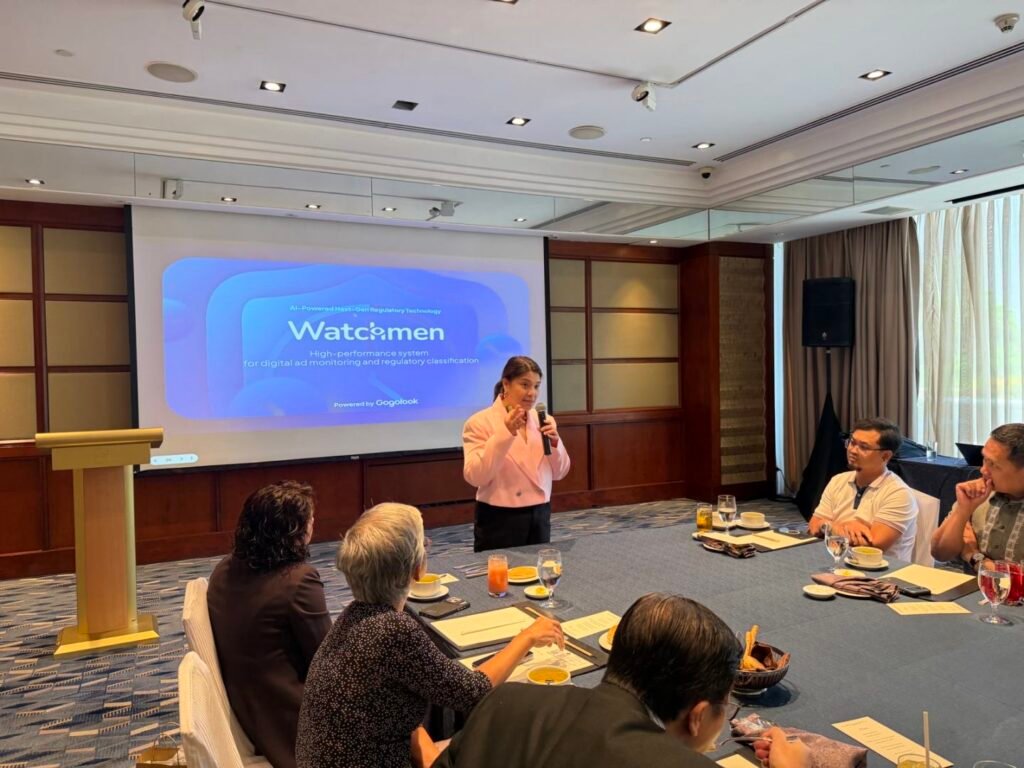
During the event, Gogolook presented tools designed for businesses, including Watchmen and its Anti Scam Intelligence or ASI SDK.
Watchmen monitors social media platforms for potentially suspicious content linked to a company’s identity, including fake advertisements and conventional or AI-generated fake accounts. According to Gogolook, identifying these accounts can help businesses detect possible brand impersonation before more customers encounter them.
The ASI SDK, meanwhile, is designed to allow companies to integrate anti-scam capabilities directly into their mobile or web applications.
Gogolook said the technology could be used by banks, financial services providers, e-commerce companies, retailers, telecommunications companies and other organizations operating digital platforms.
Instead of requiring customers to use a separate service, the SDK is intended to place scam detection within applications that consumers already use.
These enterprise tools complement the Whoscall mobile application, which is designed to identify potentially suspicious calls, text messages and links.
“Businesses can no longer treat anti-scam protection as a downstream response after harm has occurred. It must be designed into the customer journey, strengthened by shared intelligence and supported by public-private collaboration. Watchmen, a brand protection solution and Anti Scam Intelligence (ASI) SDK, an in-app anti-scam protection translate that responsibility into practical protection around the brand and within enterprise platforms, while the Whoscall Mobile App extends the defense to consumers. The organizations that protect trust at every touchpoint will be better positioned to grow in an increasingly digital economy,” Migriño emphasized.
Luigi Longanilla, Partnerships and Business Development Associate of Gogolook Philippines, demonstrated Watchmen and ASI SDK during the gathering and discussed possible applications of the technologies across customer-facing platforms.
The forum also looked beyond technology as the sole response to scams.
Jocel De Guzman of ScamWatch Pilipinas presented the Anti-Scam Quad Model, a framework that brings together government, the private sector, communities and individuals in addressing scams.
Participants discussed how technology, governance, consumer education and intelligence sharing could work together as scam tactics evolve.
For banks and financial institutions, the discussions included the possibility of adding anti-scam measures to mobile banking platforms and customer communications. Technology and digital-platform companies could similarly integrate scam intelligence into their services, while government agencies and other organizations could strengthen reporting, education and coordinated responses.
The meeting also explored potential partnerships across industries rather than limiting anti-scam efforts to the financial or technology sectors.
The executive gathering follows Whoscall’s earlier Community Meet-Up, which brought together representatives from government, banking and financial services, telecommunications, technology and social media, fintech and digital payments, academe, professional associations, and community and nonprofit organizations.
That initiative was held in collaboration with private-sector organizations, including Meta and ScamWatch Pilipinas, with support from the Cybercrime Investigation and Coordinating Center.
The earlier community gathering focused partly on public awareness under Whoscall’s “Know the Unknown” initiative, which encourages users to verify suspicious links and report suspected scams.
The latest executive meeting shifts part of that discussion toward businesses and how organizations can strengthen protection across their brands, digital products, operations and customer interactions.
Gogolook said its approach is aimed at creating multiple layers of protection involving businesses, government and consumers, with the goal of identifying threats earlier and reducing opportunities for scammers to exploit trusted brands and digital services.