Date
Loading...
Time
Loading...
About Us
Resources

For Filipinos trying to understand what lawmakers are proposing, following a bill can mean going through pages of legal language, searching government websites, and opening scanned PDF documents that can be difficult to read.
A new civic technology platform wants to make that process easier.
BatasWatch, developed by Juris.ph and BetterGov.PH, brings more than 12,000 bills filed in the House of Representatives and Senate into a searchable platform designed to make proposed legislation easier for the public to understand.
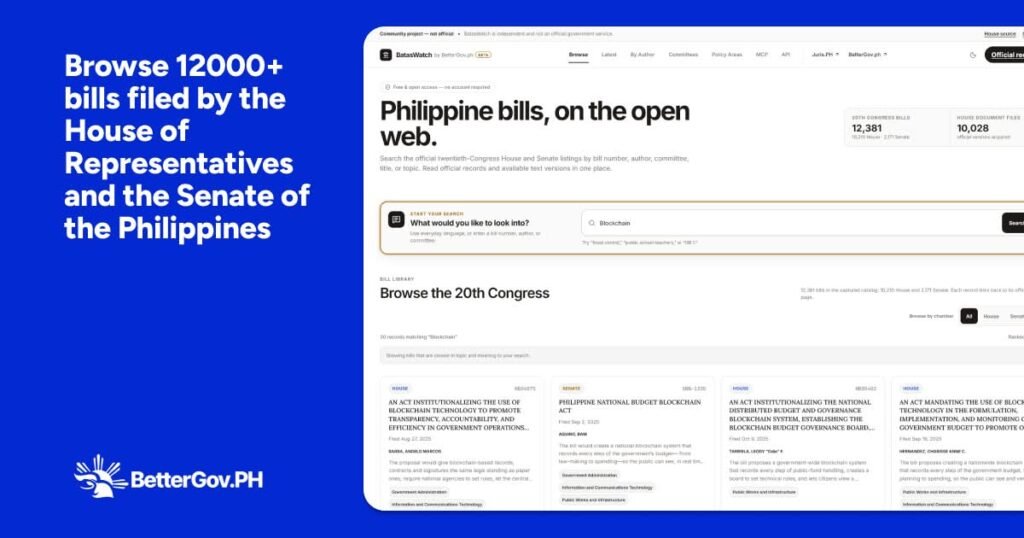
Instead of requiring users to read an entire bill to figure out what it could mean for them, BatasWatch extracts key information, including policy areas, key provisions, affected groups, rights and benefits, duties and restrictions, geographic scope, implementation requirements, funding and fiscal effects, timelines, penalties, and enforcement.
The platform also identifies scrutiny points, uncertainties, and questions citizens may want answered about a proposed measure.
Jason Torres of BetterGov.PH said the idea grew out of his own frustration with going through legislation.
“Why? I’m always annoyed going through house & senate bills and reading long versions of them (using their badly scanned PDFs),” Torres said.
“I wanted to be able to skim through them and skip the legalese and non-sense,” he added.
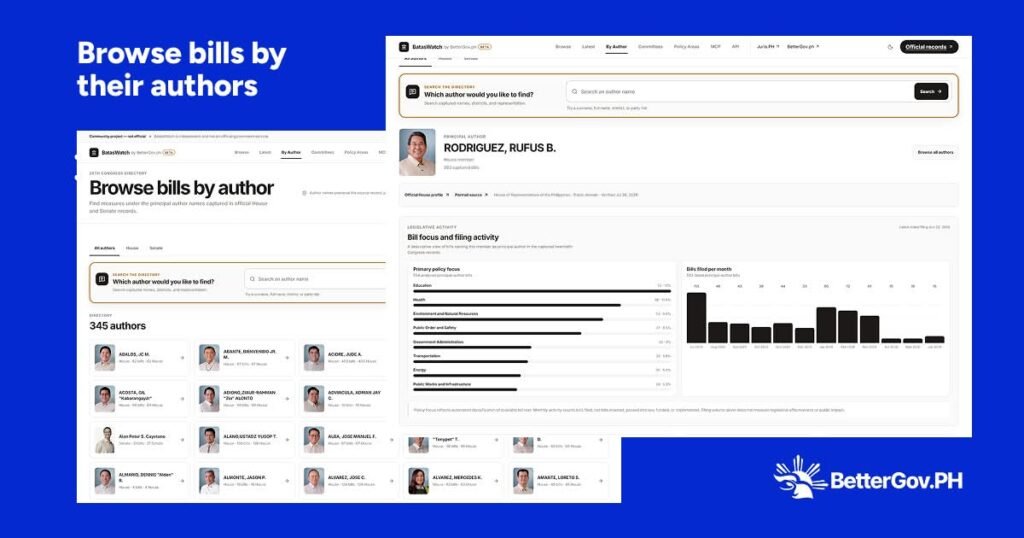
Users can also browse bills by author, making it easier to see the measures filed by individual lawmakers and the policy areas they focus on.
BatasWatch also organizes proposed legislation by policy area, allowing people to explore bills related to issues without needing to know a specific bill number.
Artificial intelligence is also used to analyze bills and surface information that may help users understand their possible impact, including potential benefits, implementation concerns, and areas that may warrant further scrutiny.
For developers, researchers, and civic organizations, BatasWatch is also available as a Model Context Protocol (MCP) server and an application programming interface (API), allowing its legislative data to be connected to compatible AI tools and used to build other applications.
Torres also launched a separate API for Juris.ph.
“Because public data should be free and not behind paywalls,” Torres said.
BatasWatch is currently in beta and identifies itself as an independent civic technology project, not an official government service.
BatasWatch Beta: https://bills.juris.ph/bills