DATE
Loading...
TIME
Loading...
About Us

Starlink usage in the Philippines declined by 6.2 percent, driven largely by a sharp price increase that weakened its value proposition in urban areas, according to analysis by Ookla.
“The Philippines’ 6.2% contraction is more directly linked to a single event: the May 2025 residential price increase from PHP 2,700 (~US$ 49) to PHP 3,800 (~US$68) — a 40% rise. Metro Manila fiber plans run PHP 1,500–2,700/month for 100 Mbps or faster, eroding Starlink’s value proposition for urban subscribers with alternatives. The remaining active base is likely concentrated in remote island communities where no comparable substitute exists,” Ookla Research Industry Analyst Affandy Johan said.
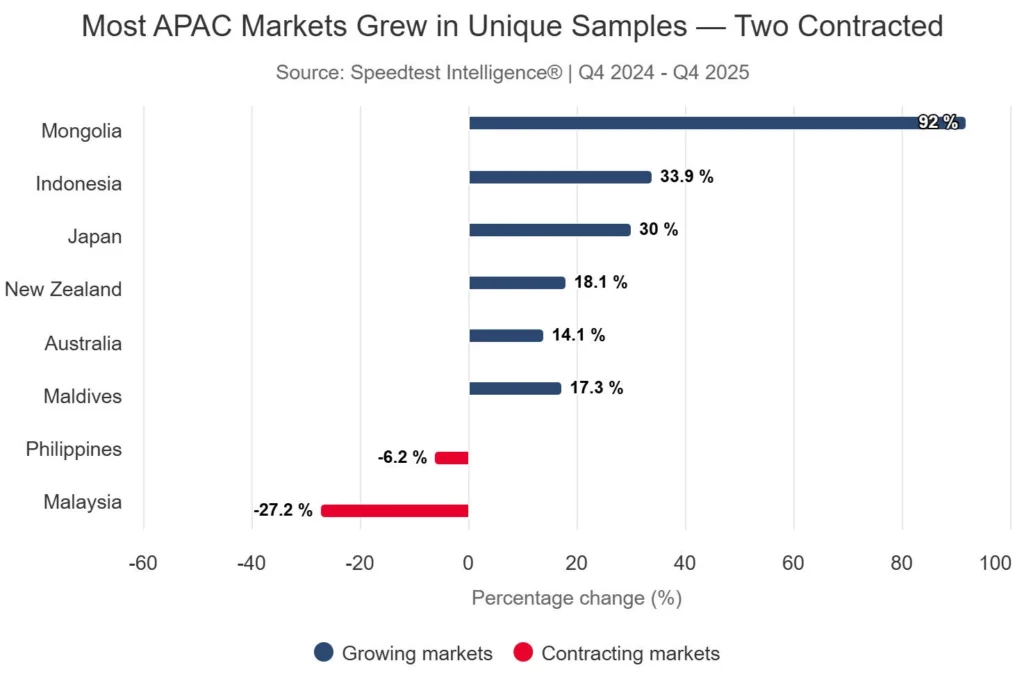
With cheaper and faster alternatives widely available, demand among urban users appears to have softened following the price hike. This shift highlights how pricing remains a critical factor in determining adoption in markets where terrestrial broadband infrastructure is already established.
Despite the decline, the Philippines remains an active Starlink market, with demand likely concentrated in remote and underserved areas where comparable connectivity options remain limited. In these locations, satellite broadband continues to provide a viable alternative to traditional fixed-line services, particularly in geographically isolated communities.
Data from Speedtest Intelligence shows that Starlink performance in the Philippines improved through 2025, although results varied toward the latter part of the year. Median speeds remain in the mid-range across Asia-Pacific, broadly aligned with emerging markets but still trailing top performers such as New Zealand and Australia, where speeds have exceeded 150 Mbps.
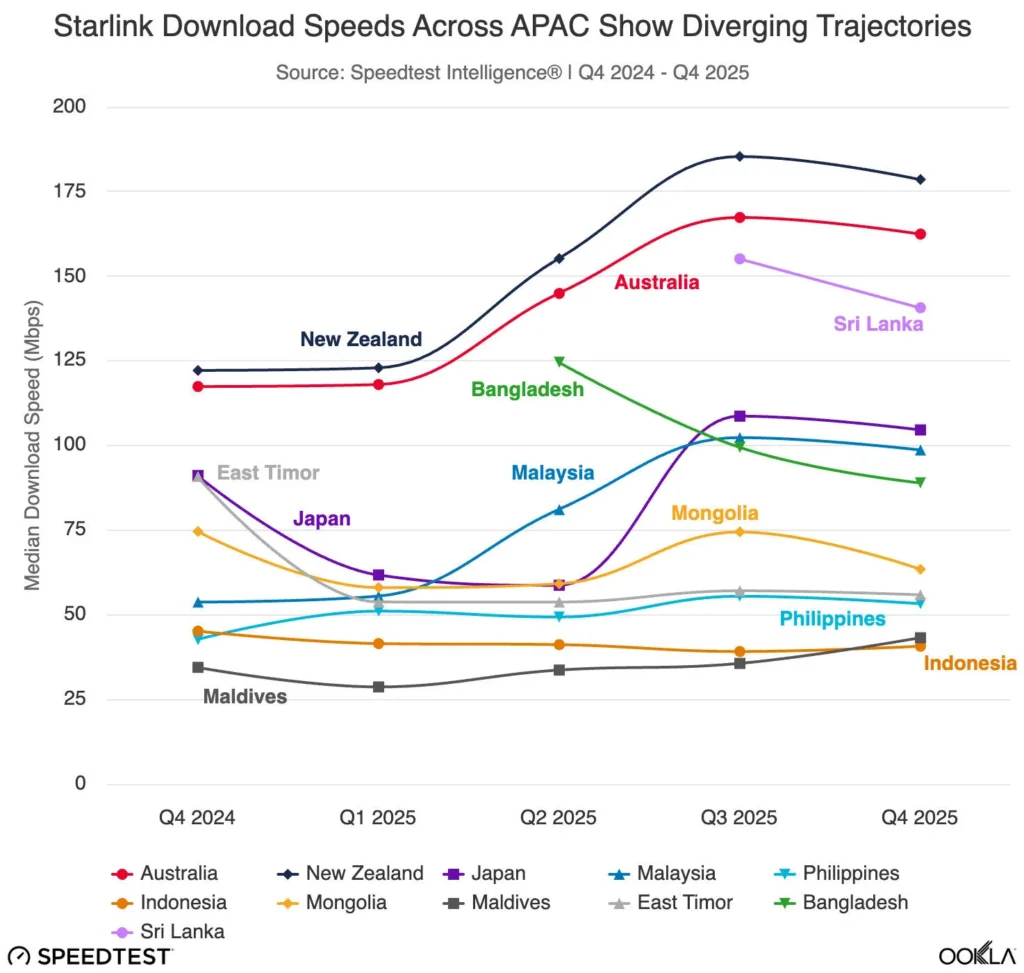
Ookla noted that differences in performance across markets are shaped by deployment conditions and geographic factors, rather than demand alone.
“The geographic challenge is more acute in the Philippines and Indonesia. Fiber rollout across all 7,641 Philippine and 17,000 Indonesian islands is economically unviable. In the Philippines, Starlink has found commercial traction beyond residential consumers,” said Johan.
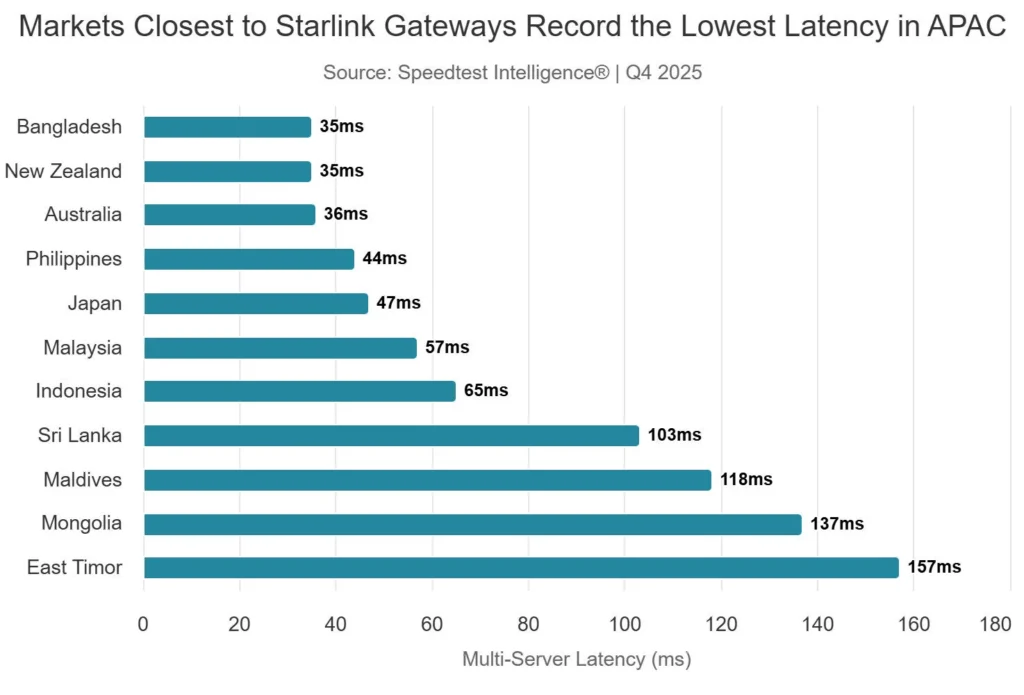
Markets with established local gateway infrastructure recorded latency as low as 35 to 36 milliseconds, approaching levels typically seen in terrestrial broadband networks. In comparison, varying deployment conditions across markets continue to influence latency and consistency in the Philippines.
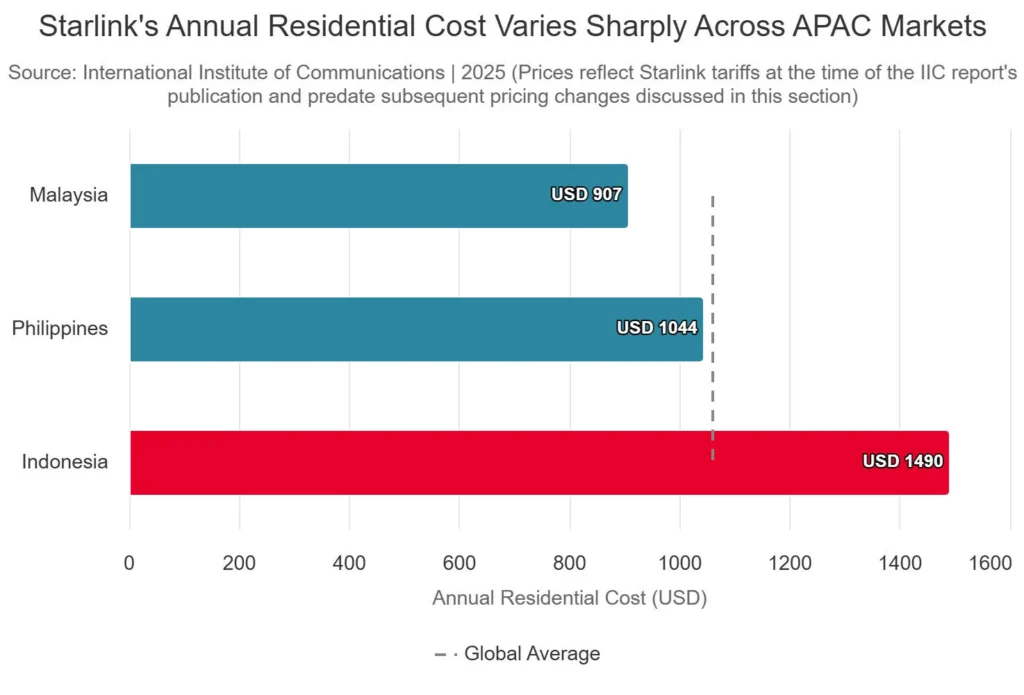
Pricing data further reflects the country’s position in the regional landscape. According to the International Institute of Communications, annual residential Starlink costs in the Philippines are estimated at around $1,044, placing it slightly above the global average. This is higher than Malaysia at about $907, but lower than Indonesia, where annual costs reach approximately $1,490.
Ookla’s findings point to a clear takeaway: while Starlink continues to serve a role in expanding connectivity, its growth in the Philippines will depend on how pricing, competition, and rollout conditions evolve in a market where fiber broadband remains the preferred option in urban centers.