Why Filipino voice artists and other creatives must rethink how they compete, protect their rights, and build careers in an AI-driven economy.
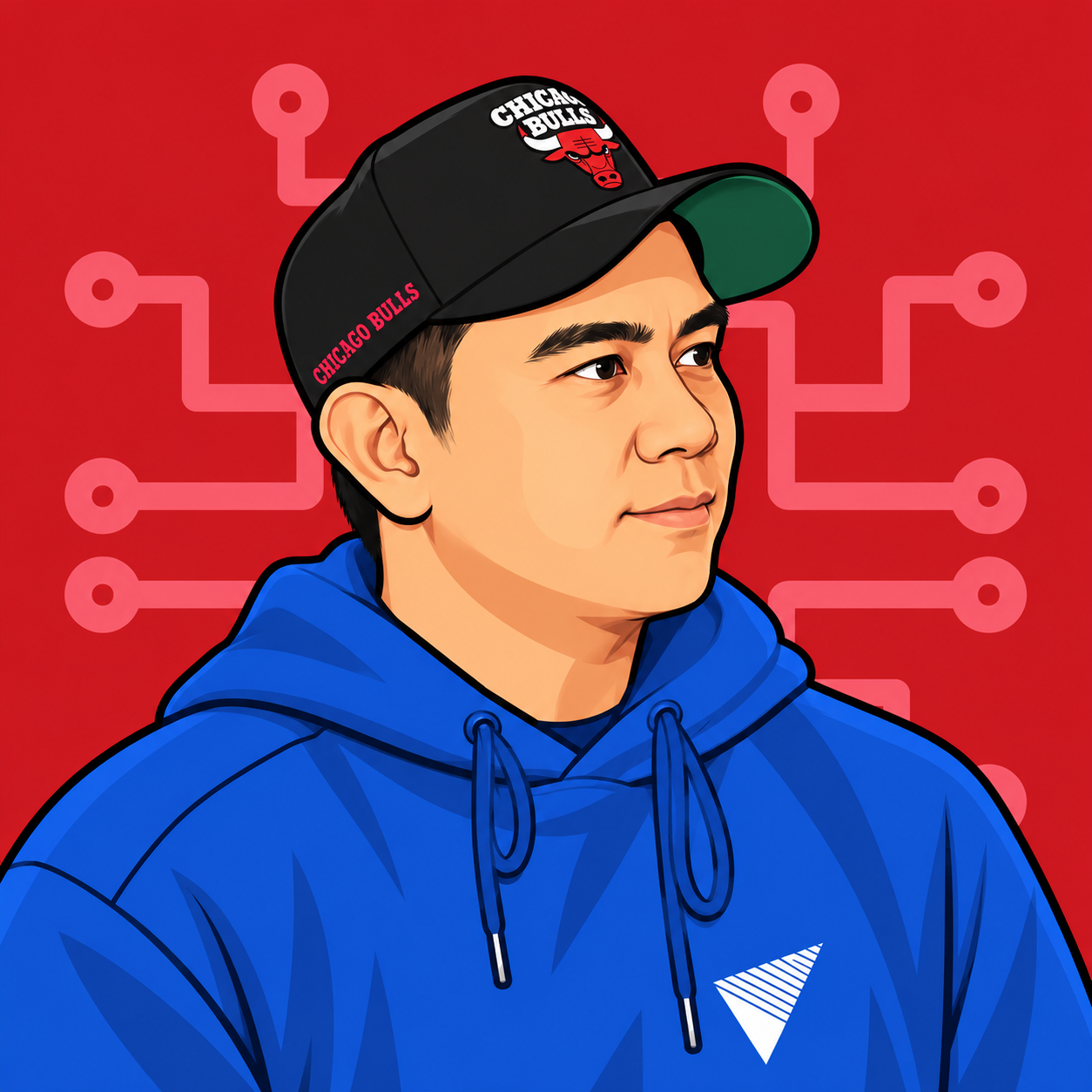
IN PHOTO: Pocholo De Leon GonzalesPhoto: IN PHOTO: Pocholo De Leon Gonzales
Replace yourself with AI before someone else does. Not your humanity, identity, or artistic judgment. Replace outdated workflows, avoidable limitations, and the assumption that yesterday’s success guarantees tomorrow’s opportunities.
IN PHOTO: Pocholo De Leon Gonzales
You may not lose your job because artificial intelligence is better than you. You may lose it because the person controlling the budget decides AI is good enough.That distinction is uncomfortable, but it may be the most important business lesson for Filipino voice talents, singers, composers, arrangers, animators, and other creative professionals. The market does not always pay for the best possible artistic performance. It pays for a result that a buyer considers valuable, delivered within a particular budget and deadline.I have spent nearly three decades in voice acting, dubbing, broadcasting, and creative education. I founded CreatiVoices Productions in 2005 to expand access to professional voice training. I have seen analog tape give way to digital audio, physical studios give way to home recording, and local auditions become remote global work. Each transition changed what clients needed and what professionals had to learn.AI is another transition, but one with unusually broad implications. It does not just change the recording equipment. It changes who can generate a voice, how many versions can be produced, and what customers believe a recording should cost.A lost voice-over job is not the whole storyA social media account recently described a daughter upset that her mother, a voice talent, reportedly lost an opportunity after a company chose an AI-generated voice. I understand the emotional reaction. A family member losing work is painful. But a public account is not enough to establish what happened, whether a contract existed, or whether anyone acted unlawfully.The first questions should be precise. Was her voice cloned without consent? Was protected audio used improperly? Was there a breached agreement or unpaid completed work? If so, there may be a legitimate rights or contractual dispute. Such cases deserve serious attention.If the company instead chose a properly licensed synthetic voice for a new project, the issue is different: a purchasing decision. We may disagree with that decision, but we cannot assume a business has acted unethically simply because it changed production methods.A better industry response would combine compassion with a practical question: what can this performer offer next, and how can her existing expertise translate into new services? Sympathy matters. So do skills, contracts, clients, and income.The buyer decides what “good enough” meansVoice actors hear flaws that ordinary listeners may miss: unnatural pauses, wrong stress, flat emotion, and culturally awkward pronunciation. A director may value a human actor’s ability to improvise and interpret a character. Yet a buyer commissioning routine narration may prioritize speed, consistency, revision cycles, or cost.An artist can be objectively more expressive and still lose the booking. That is not proof that human acting is obsolete. It is evidence that artistic excellence and commercial positioning are not the same thing.Imagine two equally capable talents. One offers a recording and insists that AI can never reproduce human emotion. The other offers a premium human performance, localization, direction, editing, and the ability to supervise authorized AI-assisted versions where appropriate. For a campaign needing many variations, the second proposal may solve more of the client’s problems.The next serious competitor to a voice actor may not be a synthetic voice. It may be another voice actor who understands both the craft and the technology.Gatekeepers cannot claim ownership of creativityThere are legitimate guardians of standards in every creative profession. Experienced singers, arrangers, producers, composers, and voice directors have knowledge worth protecting and teaching.But professional standards should not become a pretext for restricting who gets to create.AI-assisted tools reduce some barriers to entry. A student can test a soundtrack without renting a studio. A small entrepreneur can prototype a commercial. An independent creator can experiment with animation or narration before raising production funds. The resulting work will not always be good, and access to a tool is not the same as mastery. Still, access matters.Protecting artists is not the same as protecting an exclusive club. Copyright, consent, attribution, fair compensation, and contractual rights are substantive concerns. Preventing newcomers from experimenting because they lack traditional credentials is something else.My work in voice education began with a belief that talent should not depend entirely on knowing the right people. I hold the same principle now: the best leaders create opportunities; gatekeepers create obstacles. The microphone should be a means of expression, not a symbol of permission.A little consistency would improve the AI debateThere is an irony in some public arguments against AI. Modern creators routinely use automated noise reduction, transcription, intelligent editing, pitch tools, computational photography, andrecommendation systems. Yet certain AI applications are treated as inherently illegitimate when they compete directly with an existing service.That does not make every critic a hypocrite. An artist can support accessibility tools and oppose models trained without appropriate authorization. Those are coherent distinctions. But if the standard changes only when a competitor saves money, the argument is more about market pressure than ethics.Let us criticize specific practices with specific reasons. Unauthorized cloning deserves scrutiny. Unclear licensing deserves scrutiny. So do deceptive uses, exploitative contracts, and misleading claims. Simply declaring that all AI-assisted creativity is not art does little to address any of them.Why I chose to work on Filipino AI voicesAs AI voice systems advanced, I faced a choice: defend only the workflows I knew, or help Filipino performers participate in the next generation of voice technology. I chose to learn. I explored platforms including ElevenLabs, Murf, and Cartesia, along with Filipino-language voice development, datasets, and new production models.My ambition is not to erase the human performer. It is to bring Filipino artistic expertise into decisions about synthetic speech: pronunciation, accents, cultural context, performance direction, consent, and licensing. If Filipino creators are absent from these conversations, others will define how our languages and voices appear in global systems.CreatiVoices can continue to champion human-led dubbing and voice acting while the broader creative community develops expertise in responsible AI voice production. These are not mutually exclusive goals. A professional can value a live performance and still understand when a synthetic workflow is useful.I want to help build an industry in which Filipino artists are not merely consumers of foreign AI products, but contributors, licensors, directors, educators, and entrepreneurs.A practical survival guide for creative professionals1.Learn the tools. Test speech generation, editing, localization, and audio-quality workflows.Understand strengths and failure modes rather than relying on promotional demos or outrage posts.2.Sell solutions, not only recordings. Offer direction, character development, localization, revisions,quality assurance, and production management where your skills support them.3.License your voice carefully. Before permitting a voice model, clarify consent, compensation,approved uses, term, exclusivity, sublicensing, data retention, and what happens after termination.Obtain qualified legal advice for consequential agreements.4.Make human artistry worth the premium. Demonstrate emotional interpretation, improvisation,cultural nuance, collaboration, and accountability. Show the buyer the difference, not just fellow artists.5.Own more of your work. Develop original characters, podcasts, audio dramas, educational products,and other intellectual property that can create opportunities beyond one-off client bookings.6.Diversify your income. Explore teaching, directing, consulting, production, ethical licensing, andspecialist services rather than relying on one category of voice-over work.7.Build professional trust. Deliver on time, respond well to direction, respect boundaries, and makeclients confident that you can solve problems. Good artistry and good collaboration reinforce each other.8.Keep learning and help others learn. Technical advantage expires quickly. Judgment, relationships,adaptability, and the ability to teach become more valuable as tools evolve.The future is neither automatically human nor automatically AISome creative tasks will be automated. Some rates may fall. Some workers will need meaningful retraining and financial support. Other roles may grow, including voice direction, performance evaluation, multilingual localization, and AI production supervision. None of these outcomes is guaranteed for every artist.This is why an honest strategy needs two commitments at once: protect creators from exploitation, and prepare them for changing demand. Rights without market relevance can leave an artist underemployed. Adaptation without rights can leave that same artist exploited. We need both.For the Philippines, the stakes are larger than individual bookings. We need Filipino-language technology, credible licensing models, creative education, and locally owned intellectual property. We should ask not only whether AI threatens a profession, but whether Filipinos are helping design the systems that will reshape it.I have spent nearly thirty years helping Filipinos find their voices. Now I want to help them discover what those voices can become.Replace yourself with AI before someone else does. Not your humanity, identity, or artistic judgment. Replace outdated workflows, avoidable limitations, and the assumption that yesterday’s success guarantees tomorrow’s opportunities.AI may replace some of the work you used to do. It does not have to replace the future you can still create.About the AuthorPocholo De Leon Gonzales, known as The VoiceMaster of the Philippines, founded CreatiVoicesProductions and works in voice acting, dubbing, creative education, broadcasting, and Filipino AI voice innovation.
By Pocholo De Leon Gonzales · Published · 8 min read · Opinion
Key points
Replace yourself with AI before someone else does. Not your humanity, identity, or artistic judgment. Replace outdated workflows, avoidable limitations, and the assumption that yesterday’s success guarantees tomorrow’s opportunities.