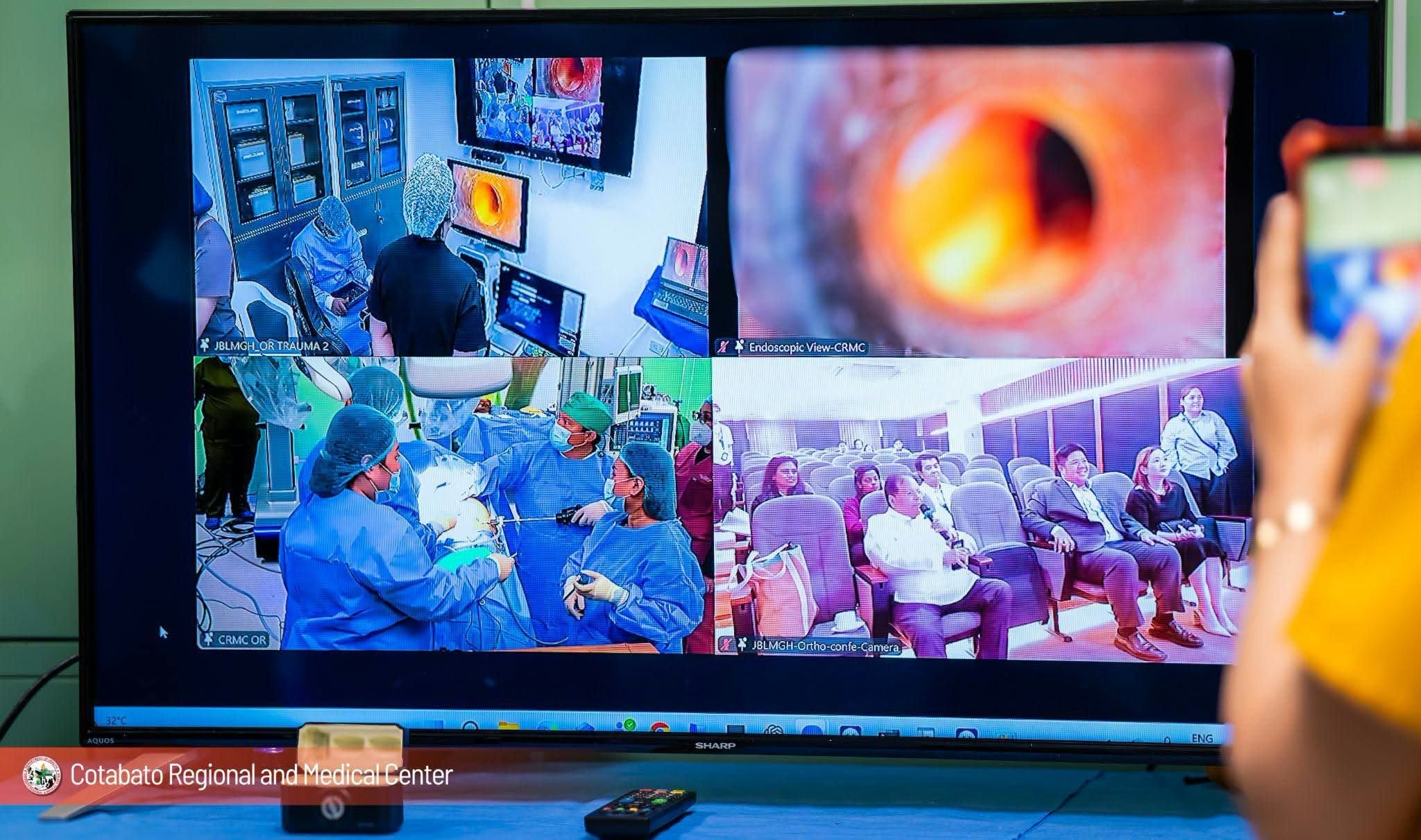
Two public hospitals in Pampanga and Cotabato City have successfully performed the country's first inter-regional telesurgery, allowing surgeons to conduct remote robotic operations across a distance of more than 1,400 kilometers.
The procedure connected Jose B. Lingad Memorial General Hospital (JBLMGH) in San Fernando, Pampanga, and Cotabato Regional and Medical Center (CRMC) in Cotabato City through a dedicated, low-latency network provided by Globe Business.
The milestone involved simultaneous, bi-directional procedures, with surgeons in Pampanga remotely operating on a patient in Cotabato while the surgical team in Cotabato performed a robotic procedure on a patient in Pampanga.
The achievement demonstrated the potential of combining surgical robotics and advanced network infrastructure to support specialized medical procedures across regional hospitals.
How the remote surgery worked
The procedures utilized the SSi Mantra 3.0 Surgical Robotic System, developed by SS Innovations, which features modular multi-arm robotic equipment capable of translating surgeons' hand movements into precise movements at remote operating tables.
The clinical initiative was spearheaded by medical technology distributor RBGM Medical Express Sales Inc., in collaboration with SS Innovations, JBLMGH, and CRMC.
To support the procedures, Globe Business established a private, direct network connection between the two hospitals, separate from regular public internet traffic.
The connection recorded response times as low as 0.76 milliseconds, enabling surgeons to monitor the procedures through 3D 4K video, communicate with operating room teams, and control robotic instruments without noticeable delays.
Backup network routes were also maintained to support uninterrupted connectivity throughout the operations.
"Digital infrastructure is moving beyond basic operational support to become an active foundation for essential public services," said Glenn Estrella, Globe Business Vice President.
"Connecting surgical teams across Luzon and Mindanao in real time demonstrates how network reliability directly expands the reach of specialized medicine. Our role is to provide a stable digital foundation that allows public hospitals and specialists to serve patients regardless of geography."
Expanding remote surgical capabilities
The milestone demonstrates the potential of extending telemedicine beyond virtual consultations to more advanced medical procedures, including robotic surgery.
According to Globe Business, 63 of the Department of Health's 70 retained hospitals currently use digital telemedicine for consultations.
The successful procedure between JBLMGH and CRMC provides a demonstration of how specialized surgical services could be delivered across regional healthcare facilities through reliable connectivity and robotic technology.
"When performing surgical procedures remotely, network performance translates directly into patient safety and surgical precision," Estrella said.
"By maintaining near-instantaneous response times and redundant routing across islands, enterprise connectivity gives medical teams the confidence to collaborate across regions. This capability allows regional medical centers to retain patients locally while drawing on specialized surgical expertise from across the country."
RBGM will also support local training, technical assistance, and the expansion of decentralized surgical units across regional healthcare facilities.
The initiative aligns with the Department of Health's National Objectives for Health, which prioritizes digital health systems to improve healthcare efficiency and regional access.
RELATED STORY:
Imagine being operated on while your doctor is 1,400 kilometers away