EDITORIAL: Why Create an AI Council If It’s Just the Cabinet?
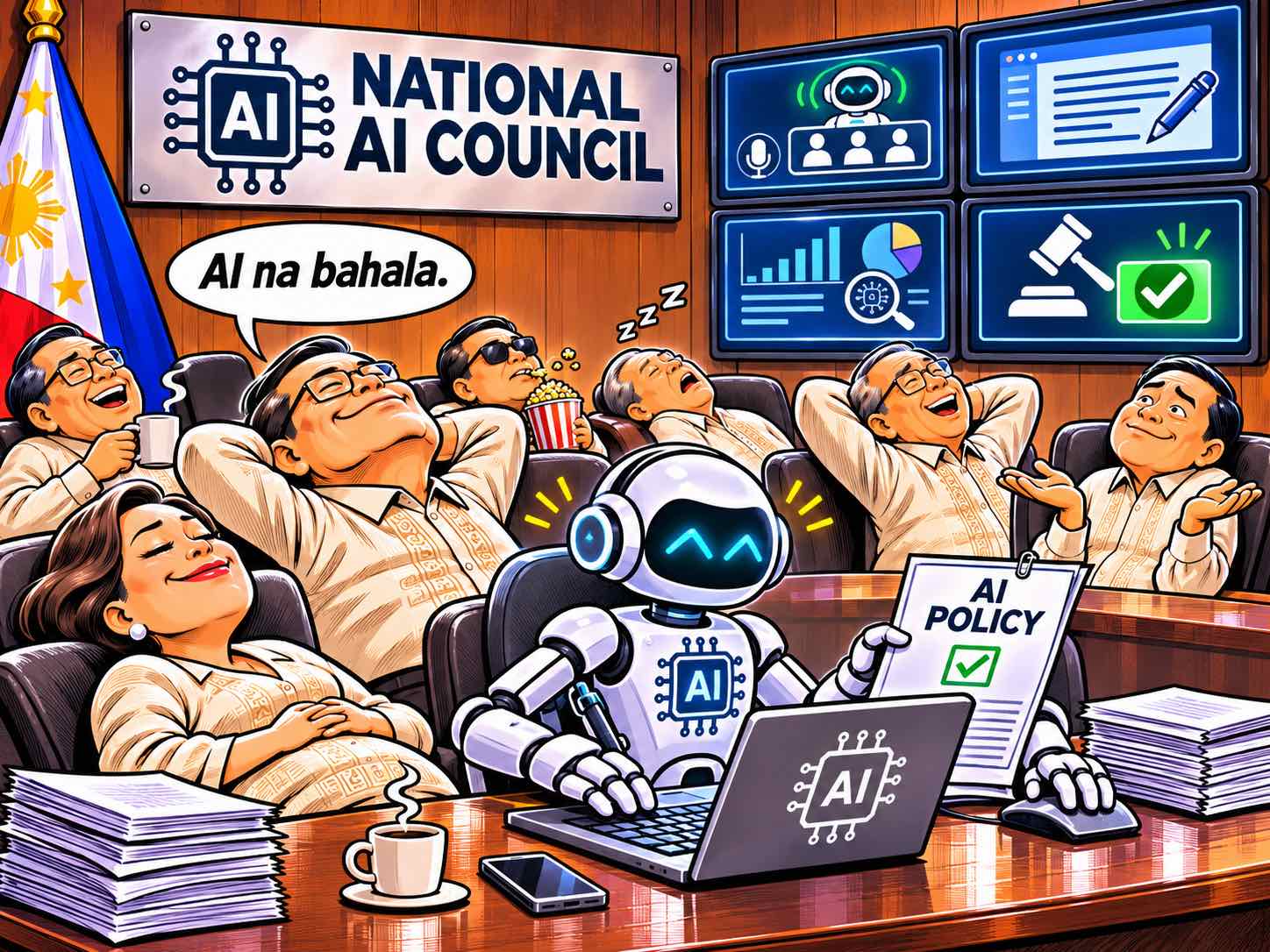
Of its 12 members, 11 represent government and only one represents the private sector. That composition deserves scrutiny. Where is the meaningful representation of Filipino AI developers, researchers, technology companies and startup founders?
-
Tech Watch PH
Government coordination is necessary. AI will affect education, employment, public spending and the delivery of basic services. Cabinet officials have responsibilities in all these areas.
But authority does not automatically come with technical expertise.
Being a Cabinet secretary does not, by itself, qualify someone to assess an AI system, understand its limitations or determine whether a proposed safeguard will work. The council must demonstrate how people with actual experience in AI development, deployment and governance will influence its decisions.
Look at the companies developing widely used AI technologies: OpenAI, Google, Microsoft, Meta, Anthropic and NVIDIA. Their work illustrates why people who build and deploy these systems need a meaningful place in discussions about their future.
One private-sector representative cannot reasonably speak for the entire Philippine AI community. A startup founder, a university researcher and a company deploying AI face different challenges. Workers, educators and advocates for privacy and consumer protection also bring concerns that deserve to be heard.
The order allows the council to invite outside stakeholders as resource persons. That is useful. But an invitation to speak is different from a guaranteed place in decision-making.
The government should establish policies, protect rights and hold harmful uses of AI accountable. It should also make it easier for Filipinos to research, develop and responsibly use the technology.
That requires people who can distinguish a real risk from an imagined one, assess claims made by technology vendors, and recognize when a proposed rule will protect the public or simply make innovation more expensive.
The council should give qualified AI practitioners and independent researchers substantial roles in its technical work. Their selection should be based on demonstrated competence, with transparent qualifications and clear rules on conflicts of interest. Business affiliation alone is no guarantee of AI expertise either.
Its performance should be measured through results: better public services, stronger research, practical training, support for Filipino enterprises and effective protection against harmful AI use.
Are we creating a council that will help the Philippines move forward, or another committee that innovators must wait for?
The Philippines needs an AI Council with technical depth, public accountability and the ability to act.
We already have a Cabinet. We do not need another one disguised as an AI Council. RELATED STORY: Marcos creates national AI council to oversee responsible AI use in PH
Key points
- Of its 12 members, 11 represent government and only one represents the private sector. That composition deserves scrutiny. Where is the meaningful representation of Filipino AI developers, researchers, technology companies and startup founders?