How to comply with BIR’s electronic invoicing requirements before December 31 deadline
Technology companies planning to offer electronic invoicing solutions must undergo a separate accreditation process under RMC No. 110-2026. Applicants must submit documents covering corporate registration, audited financial statements, technical architecture, cybersecurity certifications, system assessments, and business continuity plans.
-
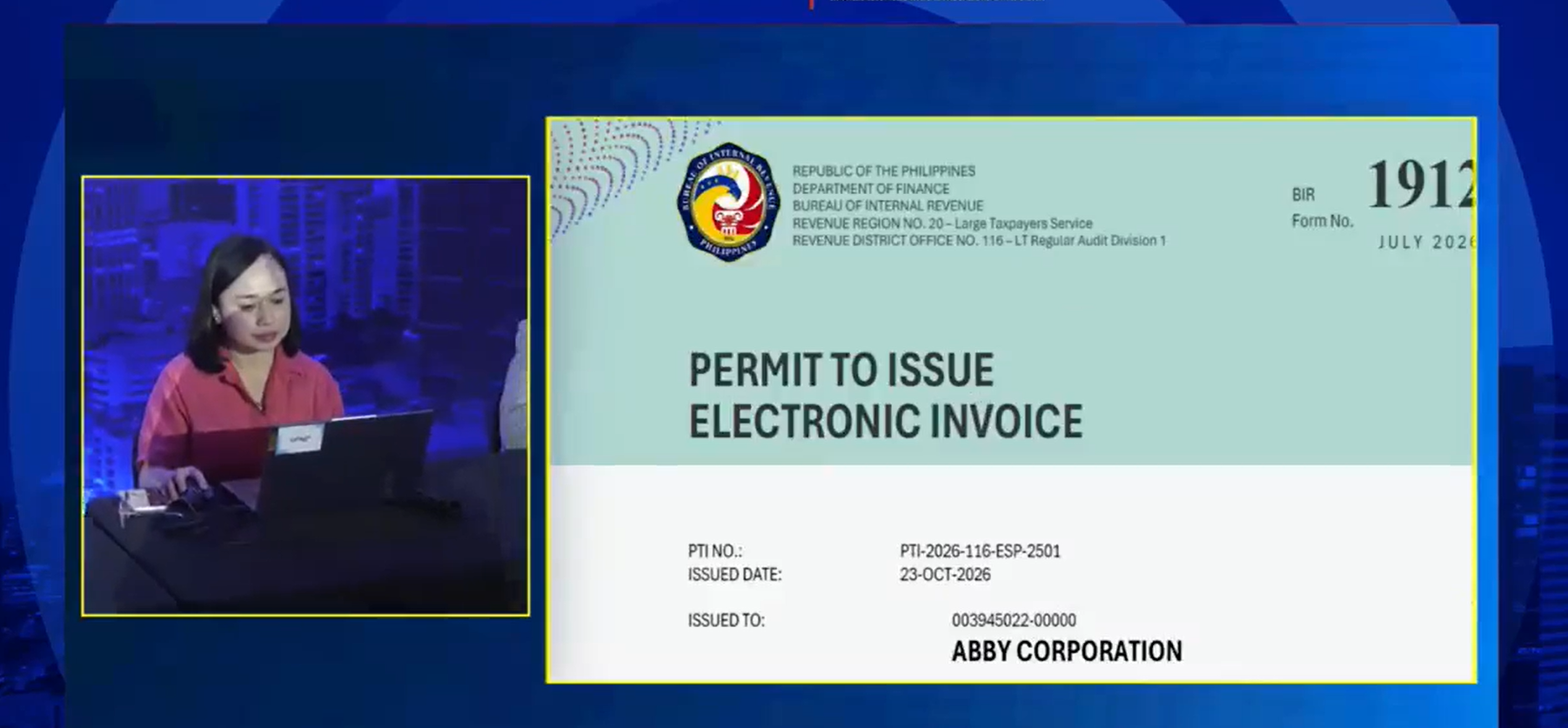
IN PHOTO: A taxpayer tries out the system during a demonstration at the Bureau of Internal Revenue’s (BIR) Electronic Invoicing System (EIS) launch.
During the launch of the Electronic Invoicing Center (EIC), the BIR outlined the steps businesses must follow to register their electronic invoicing systems, obtain the necessary permits, and meet certification requirements.
Under Revenue Memorandum Circular (RMC) No. 98-2026, the guidelines cover businesses engaged in e-commerce, large taxpayers, and those using computerized accounting and invoicing systems. Step 1: Check if your business is covered Before applying, taxpayers must determine whether they fall under the BIR's electronic invoicing requirements.
These include: Small, medium, and large taxpayers engaged in e-commerce or internet transactions. Taxpayers under the Large Taxpayer Service. Taxpayers classified as large under the Ease of Paying Taxes framework. Taxpayers using computerized accounting and invoicing systems. Other taxpayers required by the Commissioner of Internal Revenue. Covered taxpayers must comply by December 31, 2026. Step 2: Choose an electronic invoicing system Businesses may adopt their own electronic invoicing system, purchase commercially available software, or use a solution from an accredited Electronic Invoicing Service Provider (ESP).
The selected system must be capable of generating structured electronic invoices, delivering them electronically to buyers, and supporting the extraction and processing of sales data required by the BIR. Step 3: Secure a Permit to Issue Electronic Invoice Before issuing electronic invoices, businesses must obtain a PTI from the BIR.
The permit identifies the authorized invoicing system and the transactions it covers.
The BIR clarified that businesses with an existing Computerized Accounting System (CAS) acknowledgment certificate or a Point-of-Sale (POS) Permit to Use (PTU) must still apply for a separate PTI.
These existing authorizations do not automatically qualify as permission to issue electronic invoices. Step 4: Register through the BIR certification portal Taxpayers must create an account through the Electronic Invoicing System (EIS) Certification Portal.
Applicants must provide their login credentials, taxpayer registration information, and authorized representative's details.
Those using their own systems should register under the taxpayer role.
Meanwhile, accredited ESPs applying on behalf of businesses must register under the service provider role. Step 5: Submit your PTI application Once the account is approved, taxpayers may log in to the portal, select PTI Applications, and choose "Apply for Myself."
Applicants must identify their selected accredited software and provide details of their primary sales documents and secondary sales documents, if applicable.
They must then review and submit their application.
For businesses using an accredited ESP, the provider may select "Apply for Client" and submit the taxpayer's information and required system details.
However, the PTI will remain under the taxpayer client's ownership. Step 6: Wait for BIR approval The concerned Revenue District Office (RDO) or Large Taxpayer Office will evaluate the application, including registration details, supporting documents, system information, and authorized coverage.
Applications will be processed within 20 working days upon submission of complete requirements.
If deficiencies are identified, applicants may correct and resubmit their documents.
Once approved, the electronic PTI can be accessed through the portal. Step 7: Obtain EIS certification within six months After receiving the PTI, businesses may begin issuing compliant electronic invoices using their authorized systems.
However, taxpayers must also secure EIS certification within six months from the issuance of their PTI.
The BIR also clarified that electronic sales reporting is a separate compliance requirement.
A Permit to Transmit will only be required upon the applicable directive from the Commissioner of Internal Revenue. For technology providers: How to apply for accreditation Technology companies planning to offer electronic invoicing solutions must undergo a separate accreditation process under RMC No. 110-2026.
Applicants must submit documents covering corporate registration, audited financial statements, technical architecture, cybersecurity certifications, system assessments, and business continuity plans.
The accreditation process includes documentary evaluation, cybersecurity assessments, live demonstrations, interoperability testing, and system performance evaluations.
Applications are being accepted from October 16 to 30, 2026.
Interested providers may submit their documents to the ESP Accreditation Board Secretariat at Room 610, sixth floor, BIR National Office in Quezon City.
The complete guidelines are available through the BIR's official website.
Key points
- Technology companies planning to offer electronic invoicing solutions must undergo a separate accreditation process under RMC No. 110-2026. Applicants must submit documents covering corporate registration, audited financial statements, technical architecture, cybersecurity certifications, system assessments, and business continuity plans.